

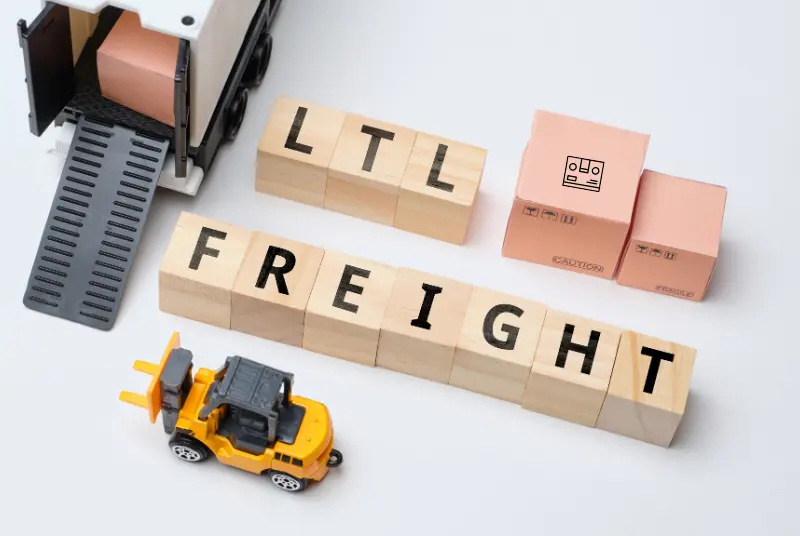
You’ve got a business on the farthest corner of California, and you want 10 pallets of your products to be shipped to Arizona. Since your shipment size is not enough to fill the entire truck, you start to wonder – do you need to pay for the full truckload anyway, even if the truck goes half empty to Arizona, or will you incur freight charges for only the portion your goods take up in the truck?
LTL, or less-than-truckload shipping, is what you should know when you are faced with such a dilemma. It is one of the smartest logistics solutions for growing businesses by allowing them to save a lot of costs and move their goods reliably. Let’s give you an insight into what LTL shipping is, how it works, and why it is a popular form of affordable logistics among companies.
What is LTL Shipping?
In simple words, LTL (Less Than Truckload) shipping refers to the sharing of a single truckload space by multiple shippers (businesses). Instead of paying for the freight charge of the entire truck, like in Full Truckload (FTL) shipping, you need to pay only for the space or portion of the truck your load occupies.
For instance, if you are an electronics goods manufacturer, your cargo may be travelling alongside some other company’s retail inventory, like food supplies or industrial equipment.
Let’s explain to you with an example:
Suppose the cost for the entire space in the truck is $1000 for travelling from California to Arizona. Now you and two other businesses share the same destination for the delivery of your products. Your cargo occupies 40% of the truck space, the goods of the other two companies occupy 30% space each.
Now, the cost each one of you incurs for the transportation is:
- You: 40% of $1000, i.e. $400
- Company A: 30% of $1000, i.e. $300
- Company B: 30% of $1000, i.e. $300
You split the cost because you’re splitting the space. It’s a win-win for businesses that don’t need to move huge loads every time.
How Does LTL Work? A Behind-the-Scenes Peek
So, what happens once you book an LTL shipment with Sunview Logistics? Here’s a quick walkthrough:
- Your freight is picked up: Your pallets or crates get picked up from your warehouse or business location.
- It’s sorted at a local terminal: Carriers consolidate shipments at regional hubs, matching up loads going in the same general direction.
- The freight travels through a network: It might stop at one or more distribution terminals where it’s unloaded, sorted, and loaded again onto different trucks.
- Final delivery: The goods reach the terminal closest to your customer and then get delivered right to their door.
If you’re picturing your shipment getting moved around a lot, you’re right. That’s why proper packaging and palletizing are super important in LTL.
Why Use LTL Freight Instead of Full Truckload?
You might wonder, why not just wait to fill a truck or pay for the whole trailer? Well, here’s the thing—LTL is often more practical, especially for small and mid-sized businesses.
Some reasons companies prefer LTL include:
- Cost Savings: You only pay for the space you use.
- Flexibility: Ship smaller, more frequent loads instead of tying up capital in giant shipments.
- Eco-Friendly: Sharing trailer space cuts down on empty miles, which reduces fuel use and emissions.
- Reliable Transit Times: Modern LTL carriers use advanced tracking and routing to keep shipments moving efficiently.
How Do Rates Get Calculated?
Now, about the dollars and cents. LTL pricing can feel like a puzzle at first, but once you know the pieces, it clicks. Rates are generally based on:
- Freight Class: This is a standardized number (from 50 to 500) that factors in density, stowability, handling, and liability. Lower class = cheaper.
- Weight: Heavier shipments typically cost less per pound.
- Distance: The farther it travels, the more you pay.
- Accessorial Charges: Liftgate, inside delivery, or residential fees can apply.
If it all sounds complicated, entrust your delivery to us. We help sort through the classifications, optimize packing, and find the best lanes to keep your costs down.
Tips To Get the Most Out of LTL Shipping
Want to avoid surprise fees and keep your shipments safe? A few preventive measures can smooth your LTL shipping experience:
- Package Smart: Use sturdy pallets and shrink wrap everything tightly.
- Label Clearly: Include origin and destination addresses on every pallet.
- Consolidate When You Can: Fewer pallets = simpler handling.
- Know Your Freight Class: Accurate NMFC classifications prevent costly reclassifications later.
Think of it like traveling with a suitcase—if you pack it carefully and tag it right, it’s much less likely to get lost or damaged.
Why Work With A Logistics Trucking Company Like Us?
Sure, you could try to navigate the maze of LTL options on your own. But the truth is, the shipping world is filled with carriers, routes, and complex rate charts. Partnering with a dedicated logistics trucking company like Sunview Logistics gives you:
- Access To Multiple Carriers: We offer you the best rates and flexible routes.
- Tracking And Visibility: You stay in the loop with where your goods are, always.
- Expertise: From choosing freight classes to handling claims if something goes sideways, we’ve got you.
- Scalability: As your business grows, we help scale your shipping without skipping a beat.
Wrapping Up: Why LTL Might Be Your Best Move
If you’re a business in Western America looking to move cargo across the country without paying for empty truck space, LTL might be your golden ticket. It’s flexible, cost-effective, and easier on the planet, too.
Ready to rethink how you move your freight? Make your supply chain stronger with Sunview Logistics, as we help businesses just like yours optimize shipping, save money, and deliver with confidence.
Frequently Asked Questions
How much can I actually save with LTL shipping?
By paying only for the space your freight occupies, many businesses save 30-50% compared to full truckload costs for similar routes.
Will my shipment be safe if it’s sharing a truck with other goods?
Yes. As long as your freight is properly packaged and labeled, LTL carriers handle it carefully. We also monitor every mile your goods travel to ensure safe transit.
Does LTL mean my delivery will take longer?
Not necessarily. While LTL shipments stop at terminals, smart routing keeps transit times competitive—often just a day or two longer than FTL.
What kinds of businesses use LTL the most?
E-commerce brands, manufacturers, distributors, and retailers with steady but smaller shipments all rely on LTL to cut costs and ship efficiently.
How do I get started with LTL shipping through Sunview Logistics?
It’s simple. Reach out to us, and we’ll help classify, pack, schedule, and track your LTL shipments so you can focus on your business.


